Slab Leak Claims: Hidden Damage and the Pipe Exclusion Myth
Why slab leaks cause far more damage than the surface shows, why the underground pipe exclusion usually fails, and how to get full coverage in California.
By Leland Coontz III, Licensed Public Adjuster · July 6, 2026
California-specific: This article discusses California law, regulations, and claim practice unless noted otherwise. Rules in other states differ.
This Article Is Not Legal Advice
This article is educational commentary by a Licensed California Public Adjuster. It is not legal advice. For legal questions about your specific situation, consult a licensed California attorney.
A slab leak is one of the most deceptive types of property damage a homeowner can face. A pressurized pipe beneath the concrete slab fails, water saturates the soil and rises through the concrete, and the homeowner notices standing water on the floor. The mitigation company arrives, shuts off the water, sets up drying equipment, and within a few days the surface looks dry. The carrier’s adjuster comes out, sees dry tile, and acts like the problem is solved.
But the real damage — trapped moisture in the bond layer, deteriorated thin-set, voids beneath the slab, saturated soil — is hidden below the tile. None of it is visible from the surface. And the carrier’s favorite coverage argument — that the pipe is “underground” and therefore excluded — is usually wrong in slab-on-grade construction.
What Happens During a Slab Leak
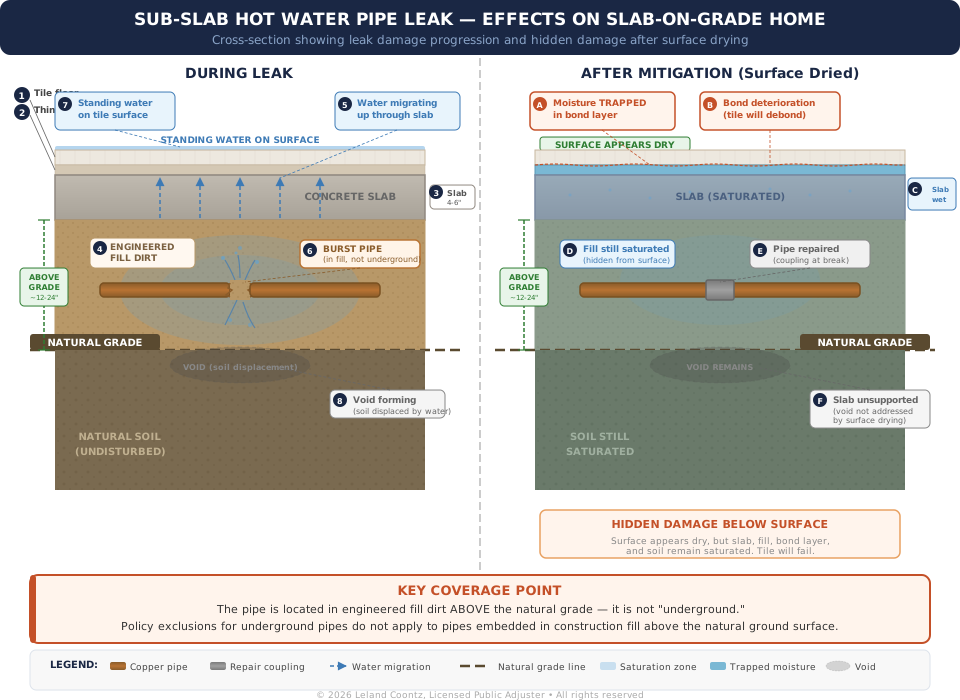
A slab leak begins when a pressurized water supply line beneath the concrete slab develops a failure — whether from corrosion, material defect, or joint failure. Because the line is under constant pressure (typically 40–80 PSI), the leak does not seep. It sprays. That pressurized water is forced into the surrounding fill dirt, displacing soil particles and creating voids beneath the slab.
Simultaneously, the water saturates the engineered fill and begins migrating upward through the porous concrete slab. Concrete is not waterproof — it is a porous material that transports moisture through capillary action. As the Portland Cement Association has documented, moisture moves to the slab surface by capillary wicking, and this mechanism can draw water from surprisingly deep sources — up to 20 feet below the slab surface in some conditions. The water rises through the slab until it reaches the bond layer: the thin-set mortar between the concrete and the tile.
Here is where the damage becomes invisible. Porcelain and ceramic tile are impervious — water cannot pass through them. The thin-set mortar between the tile and the slab becomes a moisture trap. Water accumulates in this bond layer with no evaporation path, eventually rising above the tile and producing the standing water the homeowner sees on the surface.
The diagram above illustrates this process. Note the natural grade line — the original ground surface before construction. The pipes sit in engineered fill dirt above that line, not in the natural earth below it. This distinction is critical to the coverage analysis discussed below.
Why Surface Drying Is Misleading
After the mitigation company shuts off the water supply and sets up dehumidifiers and air movers, the visible standing water disappears within hours. Within a day or two, the surface reads “dry” on a moisture meter placed on top of the tile. The mitigation company pulls its equipment. The carrier’s adjuster documents the dry readings and prepares to close the claim.
But surface drying tells you almost nothing about the condition beneath the tile. What remains hidden includes:
- Trapped moisture in the bond layer: Water is locked between the impervious tile above and the concrete slab below. There is no evaporation path. Standard surface drying equipment cannot reach it.
- Thin-set mortar deterioration: Prolonged moisture exposure weakens the cementitious bond between the tile and the slab. Even after drying, the bond integrity is compromised and cannot be assessed without removing the tile.
- Saturated concrete slab:Concrete is porous and retains moisture long after the surface reads dry. A slab that has been saturated for days or weeks can take months to fully dry — if it ever does without active intervention from below.
- Voids beneath the slab: Pressurized water displaced soil beneath the slab, creating voids that the slab now spans unsupported. These voids do not fill themselves when the water stops.
- Saturated subgrade soil: The engineered fill beneath the slab is saturated. Shutting off the water supply stops the source, but the existing moisture remains in the soil with no mechanism for drainage or evaporation.
An adjuster who documents dry surface readings and closes the claim has not investigated the loss — they have documented the top of it. For more on what a proper investigation requires, see our article on the carrier’s duty to investigate.
When the Property Won’t Dry: The Artesian Well Effect
In some cases, the mitigation contractor runs drying equipment for days or weeks, but the property never reaches dry standard. The equipment runs and runs, and the moisture readings stay elevated. Everyone is puzzled. The mitigation company suspects equipment failure or a second leak. The carrier suspects the homeowner is doing something wrong. But the real answer may be beneath the property.
When a home sits lower than the surrounding geology — at the base of a hill, in a low area of a subdivision, or in a region with a naturally high water table — a slab leak can create a connection between the fill dirt beneath the slab and the underground water table. The leak saturates the fill, and that saturated zone connects to groundwater that is under hydrostatic pressure from the higher terrain around the property. The result is an artesian well effect: water pushes upward through the fill and into the slab continuously, driven not by the original leak but by the pressure of the water table itself.
This is rare, but it happens — particularly after heavy rain seasons when the water table is elevated. The original pipe leak is the covered peril that created the pathway. The hydrostatic pressure is the mechanism that keeps the water coming. Without the leak, the fill dirt and vapor barrier would have kept the groundwater separated from the slab. The leak broke that barrier.
Look for corroborating evidence of high water table conditions on the property. Efflorescence— the white crystalline salt deposits that form on concrete and masonry surfaces — is a telltale sign that water is continuously migrating through a porous material and depositing dissolved minerals on the surface as it evaporates. If you see efflorescence on retaining walls, basement walls, or the exterior of the foundation, it confirms that hydrostatic water pressure is pushing moisture through the concrete in that area. That same pressure may be driving water up through the slab after a leak has created a pathway.
The Composite Floor Assembly
Tile, thin-set mortar, and the concrete slab are not three independent components. They form a composite floor assembly— a system designed to function as a unit. The thin-set bonds the tile to the slab, distributes loads, and prevents movement. When that bond fails, the entire system is compromised, even if each individual component looks intact from above.
You cannot assess the condition of a composite assembly by looking at its top surface. A tile floor can appear perfect — no cracks, no loose tiles, no visible damage — while the bond layer beneath it is completely deteriorated. The tile is simply resting on the slab under its own weight rather than bonded to it. The only way to determine the true condition of the floor assembly is to remove tile and inspect the bond layer directly.
Carriers that deny tile replacement by calling the damage “cosmetic” are missing the point. The damage is structural — the bond system has failed. This is the same logic that applies when carriers try to deny full scope of loss based on what is visible from the surface rather than what destructive testing reveals.
Hollow-Sounding Tiles and Tile Debonding After a Slab Leak
One of the most contentious issues on slab leak claims is what happens to the tile above the leak. In many cases, two or three tiles directly over the leak area will begin to sound hollow when tapped. The homeowner reports it. The carrier sends an expert. And the fight begins.
The “Hollow Sounding Is Not Damaged” Argument
Carriers and their retained experts frequently argue that a tile sounding hollow is not “damaged.” They will bring in a consultant who taps tiles with a small metal ball or rod throughout the entire home — including rooms far from the leak — and inevitably finds a few tiles in other areas that also produce a hollow sound. The expert then concludes that hollow-sounding tiles are a pre-existing condition unrelated to the slab leak.
This analysis ignores the obvious. If three tiles directly above the slab leak sound hollow, and two weeks later five tiles in the same area sound hollow, and a month later those tiles are coming completely loose — what other explanation is there? The progressive debonding is centered on the leak location and expanding outward over time. That is not a pre-existing condition. That is active, ongoing damage from water undermining the bond layer in precisely the area where water was forced through the slab.
A hollow-sounding tile isdamaged. It means the bond between the tile and the slab is failing — the thin-set mortar is separating, and the tile is resting on the slab under its own weight rather than being adhered to it. That is the beginning of complete debonding. A tile that sounds hollow today will be loose tomorrow, and if it is in a traffic area, it is a trip hazard and a cracking risk. The carrier’s argument that it is “not damaged” is like saying a cracked windshield is not damaged because it has not yet fallen apart.
Documenting Progressive Tile Debonding
If tiles above the leak are starting to sound hollow, document it immediately. Tap each tile with a hard object and record the sound on video. Mark the hollow tiles with painter’s tape. Then repeat the same test a week or two later and document any expansion. If the hollow zone is growing outward from the leak location, that progression is powerful evidence of causation that is very hard for the carrier to explain away. If a tile comes completely loose in one piece, photograph it, photograph the bare slab beneath it, and preserve both the tile and any thin-set residue — that is direct physical evidence of bond failure.
Surface Water Pooling and Tile Damage
Slab leaks do not only damage tiles from below. When water rises through the slab and reaches the tile surface, it may pool in low spots if the floor has even a slight slope. A series of tiles along a far wall where water collected can all debond in the same area — and the pattern of damage will match the pattern of pooling, not the location of the pipe.
Carriers sometimes respond to this by arguing that water does not damage tile — after all, tiles are used in showers and they hold up fine. This argument fails for two reasons. First, a slab leak subjects the tile to hydrostatic pressure from below, pushing water up through the slab and into the bond layer from underneath. Shower tile is designed to shed water on the surface, not resist water being forced through the substrate. Second, floor tile sits on a horizontal concrete slab with water pooling on it continuously during a leak — not the brief, directed water contact that wall tile in a shower experiences. The comparison is not valid.
Tile Installation Quality and Why It Doesn’t Matter the Way Carriers Think It Does
To understand why the carrier’s arguments about tile installation are usually wrong, you need to understand what a proper tile installation looks like. The Tile Council of North America (TCNA) publishes installation standards, and ANSI A108.5 establishes the requirements for tile set in thin-set mortar. The standard specifies:
“Average contact area shall be not less than 80% except on exterior or shower installations where contact area shall be 95% when not less than three tiles or tile assemblies are removed for inspection.” The coverage “shall be sufficiently distributed to give full support of the tile with particular attention to provide support under all corners of the tile.” — ANSI A108.5
A truly ideal floor tile installation involves all of the following:
- Clean, properly prepared substrate: The concrete slab must be clean, free of contaminants, and profiled to accept the thin-set
- Fresh thin-set mortar: Thin-set must be properly stored and not exposed to humidity before mixing, which can cause premature hydration and reduced bond strength
- Acrylic admix (latex additive): Adding acrylic admix to the thin-set significantly increases bond strength, flexibility, and water resistance
- Proper water ratio: Too much water weakens the thin-set and reduces bond strength
- Mechanical mixing with an electric drill:Thin-set must be mixed thoroughly in small batches using a mixing paddle on an electric drill — not mixed by hand or in oversized batches
- Working within the open time: Thin-set has a limited working time after mixing. If the installer works past the open time, the thin-set skins over and the bond is compromised from the start
- Back-buttering the tile: Applying thin-set to both the substrate and the back of the tile is critical to achieving adequate coverage. ANSI standards require a minimum of 80% contact coverage for interior dry areas and 95% for wet areas
- Proper setting: The tile must be tapped firmly into place and adjusted before the thin-set begins to set
Here is the critical point: a tile installation does not need to meet every one of these ideal conditions to be an acceptable, code-compliant installation that performs adequately in normal service. An installer who does not back-butter, or who uses thin-set without acrylic admix, or who achieves 75% coverage instead of 95%, has produced an installation that may be less than ideal — but it can still meet building code and trade standards, and it can still perform without failure for years or decades under normal conditions.
If tiles have been in place for seventeen years without coming loose, the installation was performing adequately. When those same tiles suddenly start debonding after a slab leak, the cause of the debonding is the water — not the installation method. The water overwhelmed whatever bond existed.
The Exclusion Argument: Condition vs. Causation
Carriers will often attempt to invoke the wear and tear exclusion or the construction defect exclusion to deny coverage for debonded tiles. Their argument goes: the tiles came loose because the installation was defective — not enough coverage, no back-buttering, no acrylic admix — and construction defect or wear and tear is excluded.
This argument confuses condition with causation. The exclusions for wear and tear and construction defect are cause-of-loss exclusions. They exclude damage caused by wear and tear or caused by a construction defect. They do not exclude damage to property that happens to be worn or happens to have been imperfectly installed.
In a slab leak claim, the cause of lossis the discharge of water from a plumbing system — a covered peril. The condition of the tile installation — whether it was back-buttered, whether acrylic admix was used, what percentage of coverage was achieved — is the pre-existing conditionof the property, not the cause of the loss. The water is what caused the tiles to debond. The installation quality may have affected how quickly they debonded, but it did not cause the debonding. Without the water, the tiles would still be in place — as they were for years before the leak.
This is the same analytical error discussed in our article on wear and tear as a cause of loss exclusion. A cause-of-loss exclusion cannot be applied based on the condition of the damaged property. The question is always: what event caused this damage?If the answer is the slab leak, the exclusion does not apply — regardless of the condition of the tile installation.
Even if the carrier attempts to invoke these exclusions, the burden of proof is on the insurerto demonstrate that the excluded peril — not the covered peril — is the cause of the damage. The insured does not need to prove that the installation was perfect. The insurer must prove that the installation deficiency, not the water, caused the tiles to fail. When tiles have been in service for years without issue and only fail after a water event, that burden is very difficult to meet.
Progressive Debonding Is Evidence of Causation
If three tiles sound hollow immediately after the leak is discovered and five tiles sound hollow two weeks later, the expansion of the hollow zone proves active, ongoing damage from a specific cause. Pre-existing conditions do not progressively worsen in a pattern centered on a known water event. If the carrier’s expert tested the entire home and found hollow tiles only in the area of the slab leak, that pattern is dispositive — it is the leak, not the installation.
Fill Dirt vs. Underground: The Exclusion That Doesn’t Apply
This is the most important section of this article. Many homeowner’s policies contain an exclusion for damage to plumbing, electrical, or other systems that are “underground” or “beneath the surface of the ground.” Carriers routinely apply this exclusion to any pipe located under a concrete slab, regardless of how the pipe got there or what material surrounds it. In most slab-on-grade construction, this application is wrong.
“We do not cover the cost of tearing out and replacing any part of a building, or other structure, necessary to repair or replace a system or appliance that is underground, beneath the foundation, or beneath the surface of the ground.” — Common carrier endorsement language
Note that the standard ISO HO-3 form (HO 00 03) does not contain this specific “underground” limitation within the accidental discharge peril. The ISO form has a separate Section I exclusion for “water below the surface of the ground, including water which exerts pressure on, or seeps or leaks through a building, sidewalk, driveway, foundation, swimming pool or other structure.” Many carriers add their own endorsements that introduce “underground” limitations beyond what the ISO form contains. When your carrier invokes an underground pipe exclusion, the first step is to determine whether the language is in the base policy form or in a carrier-specific endorsement — and whether it was properly applied.
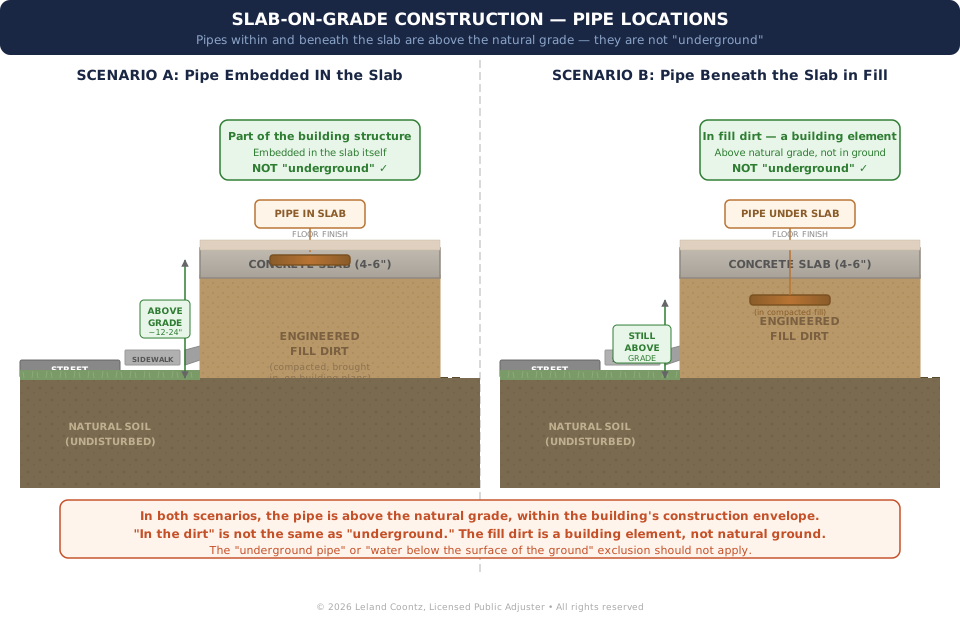
The word “underground” has a plain meaning: beneath the surface of the ground. The “ground” is the natural earth — the grade that existed before any construction began. In slab-on-grade construction, however, the pipes do not sit in the natural earth. They sit in engineered fill dirt— imported material that was placed on top of the natural grade during the construction process.
Here is how slab-on-grade construction works. The builder excavates to the natural grade, lays the plumbing lines, and then brings in fill dirt — typically sand, gravel, or engineered fill — which is compacted in lifts around and above the pipes. A vapor barrier is placed on top of the fill, and concrete is poured over all of it. The pipes are embedded in construction material, not buried in the earth.
The natural ground surface — the actual “surface of the ground” referenced in the policy — may be inches or even feet below the bottom of the slab. A pipe running through imported fill material above the natural grade is not “underground.” It is embedded in construction fill, which is part of the building itself, no different from the concrete, the rebar, or the vapor barrier.
Fill dirt is brought in, placed, and compacted as part of the construction process. It is construction material, not natural earth. The policy exclusion contemplates pipes buried in the ground — utility lines running through the yard, sewer laterals under the driveway, water mains beneath the street. It does not contemplate pipes embedded in the building’s own construction materials above the natural grade.
Review the diagram at the top of this article and note where the natural grade line falls relative to the pipe locations. In most slab-on-grade homes, the pipes are entirely above the natural grade. For a detailed illustration of pipe locations relative to the natural grade, see our diagram of slab-on-grade pipe locations.
How to Prove Pipes Are in Fill Dirt
If your carrier invokes the underground pipe exclusion, request a copy of the original grading plan from the building department. The grading plan shows the natural grade elevation and the finished floor elevation. The difference between those two numbers is the depth of fill. If the pipe sits within that fill zone, it is not underground — it is in construction material above the natural grade.
Pipes in the Slab vs. Pipes Below the Slab
Not all slab leaks behave the same way, and the location of the pipe relative to the concrete determines how the water travels. Understanding this distinction is critical for locating damage that may appear far from the actual leak.
Pipes Embedded in the Concrete
In some slab-on-grade construction, particularly older homes, the water supply lines are cast directly into the concrete slab rather than running through the fill below it. When a pipe embedded in the slab develops a pinhole leak or joint failure, the water does not immediately pool beneath the slab. Instead, it follows the path of least resistance — which is often along the outside surface of the pipe itself.
This creates a deceptive damage pattern. The water travels along the exterior of the pipe within the concrete and may emerge at a completely different location than the leak — most commonly where the pipe transitions from the slab into a wall cavity. The water rides the outside of the pipe upward into the wall, producing moisture damage in a wall that may be several feet from the actual point of failure. An adjuster who only looks at the wet wall may miss the real source entirely.
Pipes in the Fill Below the Slab
When pipes run through the fill dirt beneath the slab, a leak sprays water into the surrounding soil. The water saturates the fill, rises through the porous concrete, and produces the standing water and bond layer damage described above. The damage pattern is typically centered above or near the leak location, though water can travel laterally through the fill and emerge at a distance.
Leak Detection: Finding the Source
Before any repair can begin, the leak must be located precisely. Slab leak detection is a specialized service that uses several methods, often in combination:
- Acoustic/sonic detection:The most common method. A technician uses sensitive listening equipment — ground microphones and electronic amplifiers — to listen for the sound of pressurized water escaping through a pipe wall or joint. The sound signature changes as the listener moves closer to the leak, allowing precise location.
- Electromagnetic/radio detection:A transmitter sends a radio signal through the pipe, and a receiver on the surface traces the pipe’s path through the slab. This is primarily used to map the pipe layout before cutting into the slab, so the plumber knows exactly where the lines run.
- Ground-penetrating radar (GPR):Radar pulses are sent into the slab and the reflected signals reveal anomalies beneath the concrete — voids, saturated zones, and the location of embedded utilities. GPR is particularly useful for identifying voids and the extent of soil saturation without cutting into the slab.
- Infrared/thermal imaging: Hot water line leaks produce warm spots on the slab surface that are invisible to the eye but clearly visible on a thermal camera. This method is effective for hot water supply line leaks but less useful for cold water or drain lines.
The reasonable cost of professional leak detection is part of the covered loss on a covered claim. The carrier should pay for the leak detection service because it is a necessary step in determining the source and extent of the damage. If the carrier refuses to authorize leak detection, document the refusal in writing.
What the Insurance Company Pays For — and What It Doesn’t
This is one of the most misunderstood aspects of slab leak claims. The standard ISO HO-3 homeowner’s policy covers “accidental discharge or overflow of water or steam from within a plumbing, heating, air conditioning or automatic fire protective sprinkler system or from within a household appliance.” It then adds specific coverage for access costs:
“This peril includes the cost to tear out and replace any part of a building, or other structure, on the ‘residence premises’, but only when necessary to repair the system or appliance from which the water or steam escaped.” — ISO HO 00 03, Section I — Perils Insured Against
But it also contains a critical limitation:
“This peril does not include loss to the system or appliance from which the water or steam escaped.” — ISO HO 00 03
In plain English: the policy pays for everything involved in accessing the leak and restoring the home, but it does not pay for the pipe itself. The pipe is the “system from which the water escaped.” Everything else — the concrete, the fill, the flooring, the drywall, the personal property — is the “part of the building” that was torn out to reach it or damaged by the water.
Here is what the carrier should pay on a covered slab leak:
- The after-hours emergency service call: If the leak is discovered after business hours, the emergency plumbing call to shut off the water and identify the problem is a covered cost
- Leak detection: The professional service to locate the exact point of failure beneath the slab
- Opening up the slab: Cutting and removing the concrete to access the failed pipe
- Backfilling the slab: Replacing the excavated fill material after the pipe is repaired
- New concrete: Pouring and finishing the replacement concrete
- Floor leveling: Ensuring the repaired section is level with the surrounding slab
- Replacement of flooring: Replacing the tile, carpet, or other floor covering that was removed to access the slab, including matching the replacement to the existing flooring
- Resulting water damage: Damage to baseboards, drywall, cabinets, personal property, and any other components damaged by the water
What the carrier typically does notpay for is the actual plumbing repair — sweating (soldering) a new section of pipe, replacing the failed fitting, or any other repair to the pipe itself. The pipe is the “system.” Everything else is the “part of the building.” On most slab leak claims, the plumbing repair itself is a relatively small cost compared to the access, restoration, and resulting water damage — so the coverage for everything except the pipe is where the real value lies.
Don’t Let the Exclusion Swallow the Coverage
Some carriers try to expand the pipe exclusion to include the cost of accessing the pipe — arguing that because the pipe itself is excluded, the cost of cutting through the slab to reach it is also excluded. This is wrong. The policy covers the cost of tearing out and replacing parts of the building necessary to access the source of the water damage. The slab, the fill, the flooring — those are parts of the building, not parts of the plumbing system.
Methods of Slab Access and Repair
How the slab is opened matters. The two primary methods — saw cutting and jackhammering — each have advantages and risks that directly affect the cost, the scope of collateral damage, and whether the repair is even feasible.
Saw Cutting
A concrete saw produces a clean, straight cut through the slab with minimal vibration to the surrounding structure. The cut edges are smooth, which makes the patching process more predictable. Saw cutting is generally the less destructive option for the slab itself and the preferred method when the surrounding foundation or soil conditions are a concern.
However, saw cutting produces a significant amount of respirable crystalline silica dust — a serious respiratory hazard regulated by OSHA under 29 CFR 1926.1153. The permissible exposure limit (PEL) is just 50 μg/m³ as an 8-hour time-weighted average — a threshold easily exceeded by dry-cutting concrete. Under OSHA Table 1, employers using the engineering-control compliance option must equip handheld power saws cutting concrete with an integrated water delivery system that continuously feeds water to the blade. For indoor or enclosed-area cutting under Table 1, an APF 10 respirator is typically required even on short-duration tasks, with higher APF requirements for longer-duration work. The work area should be contained with plastic sheeting over doorways and HVAC returns. The silica dust can contaminate the entire home if containment is inadequate, turning what was a plumbing repair into an environmental remediation.
Jackhammering
Jackhammering breaks the concrete into pieces for removal. The rough, irregular edges left by the jackhammer can actually provide better mechanical adhesion for the new concrete patch — the uneven surface gives the new pour something to grip. This can produce a stronger repair at the patch boundary.
The downside is vibration. Jackhammering transmits significant vibration through the slab and into the surrounding soil. On foundations built on loose, sandy, or poorly compacted fill, that vibration can destabilize the subgrade, compact the fill unevenly, and — critically — cause additional pipe joints to fail elsewhere in the slab. A repair that fixes one leak but causes two more is not a repair. In homes where the plumbing is already deteriorating from age, water chemistry, or manufacturing defects, jackhammering is a real risk.
Patching the Slab: Pinning, Leveling, and Getting It Right
Regardless of whether the slab is saw cut or jackhammered, the patch must be done correctly or the repair will fail. After the pipe is repaired and the excavation is backfilled, the concrete patch needs to be structurally tied to the existing slab. This means pinning the patch: drilling holes into the edge of the existing slab, inserting rebar, and securing it with structural epoxy. The rebar bridges the joint between old concrete and new, preventing the patch from settling independently or separating from the surrounding slab.
The new concrete should be poured level with the existing slab surface — not high (requiring grinding, which creates more silica dust) and not low (requiring excessive leveling compound). After the concrete cures, a top coat of floor leveling cement (self-leveling compound) is applied to create a perfectly flat, smooth surface for the new flooring. Without this leveling step, even a slight unevenness at the patch boundary will telegraph through the tile and produce lippage or cracking at the transition.
The Post-Tension Slab Problem
Some homes — particularly tract homes built from the 1970s onward — are constructed on post-tension slabs. A post-tension slab contains high-strength steel cables (tendons) that are tensioned after the concrete is poured, compressing the slab to resist cracking and allowing thinner concrete. These cables run through the slab in both directions under enormous tension — often 25,000 to 35,000 pounds per cable.
Cutting a post-tension cable is extremely dangerous. These cables are typically stressed to greater than 30,000 pounds of tension. If a tensioned cable is cut with a saw or core drill, it can rip out of the concrete with a sudden whip-like motion. Industry safety publications warn that consequences “could include slab destruction, equipment damage, serious injury, or even death.” A single severed tendon can crack the slab in multiple directions and compromise the structural integrity of the entire foundation. Saw cutting a post-tension slab without knowing the exact location of every tendon is not a repair — it is a demolition risk.
How do you know if your home has a post-tension slab? Look for a stamped medallion or warning placard, typically found on the garage floor just inside the garage door or on the foundation stem wall. It will say something like “CAUTION — POST-TENSIONED SLAB — DO NOT CUT OR CORE.” If the medallion has been covered by flooring or is not visible, check with the neighbors — in a tract home development, if the neighboring homes have post-tension slabs, yours almost certainly does as well. The original building plans will also show the tendon layout.
If the slab is post-tensioned and access cuts are necessary, ground-penetrating radar or other scanning technology must be used to locate every tendon before any cutting begins. Even then, the risk may be high enough that accessing the pipe through the slab is not the most practical repair method.
When Rerouting Is More Practical Than Slab Access
In some situations, the most cost-effective and least destructive repair is to abandon the failed pipe in the slab and reroute the plumbing through the walls, attic, or above the ceiling. This avoids cutting into the slab entirely — no silica dust, no vibration risk, no post-tension cable danger. Rerouting is particularly worth considering when:
- The slab is post-tensioned: The risk and cost of locating every tendon and cutting between them may exceed the cost of a full reroute
- The flooring is expensive and undamaged:If you have marble, natural stone, or other high-value flooring that has not yet been damaged by the leak, it may be far more cost-effective to reroute around the floor rather than destroy it to access the pipe beneath. Replacing a marble floor can cost tens of thousands of dollars — rerouting through the walls may cost a fraction of that
- Multiple leaks suggest systemic failure: When the entire plumbing system is deteriorating from aggressive water chemistry or manufacturing defects, repairing one pipe section at a time by cutting into the slab repeatedly makes no sense. A full reroute addresses the systemic problem in one repair
- The soil conditions make vibration risky: On loose or poorly compacted fill, jackhammering to access one leak may cause additional failures elsewhere
However, rerouting does not address the damage that has already occurred beneath the slab — the voids, the saturated fill, the compromised bond layer. If the floor has already started to come loose, the tile is cracked, or the bond layer is deteriorated, the flooring replacement is happening regardless of whether the plumbing is accessed through the slab or rerouted through the walls. The reroute argument is strongest when the flooring is intact and the primary goal is avoiding unnecessary destruction of an expensive floor. When the floor is already damaged, the slab needs to be opened anyway to address the subgrade conditions.
Post-Tension Slab Access Costs
If your home has a post-tension slab, the additional cost of GPR scanning to locate tendons, the engineering required to plan safe cut locations, and the potential need for rerouting are all part of the reasonable cost of the repair. The carrier cannot pay for a standard slab access on a post-tension foundation — the repair method must account for the actual construction of the home. If the carrier’s estimate assumes a conventional slab, challenge the estimate.
Why Copper Pipes Fail: Manufacturing Defects and Water Chemistry
Slab leaks are not random events. Copper pipes fail for identifiable reasons, and understanding those reasons can be relevant to both the coverage analysis and the scope of the repair. A single pinhole leak in a copper line may be an isolated failure — or it may be the first sign that every pipe in the slab is deteriorating from the same cause.
Manufacturing Impurities
Copper pipe quality depends on the purity of the copper used in manufacturing. When trace amounts of iron, steel, or other contaminant metals are present in the copper, those impurities create localized galvanic cells within the pipe wall. Over years of water exposure, these cells corrode preferentially, thinning the pipe wall at specific points until a pinhole leak develops.
A related and well-documented manufacturing issue involves carbonaceous residues left on the interior surface of copper tubing during the bright-annealing process. When drawing lubricants are not fully burned off during manufacturing, carbon deposits remain on the tube surface and act as initiation sites for Type I pitting corrosion. Research spanning three decades has identified this as one of the primary manufacturing- related causes of premature pinhole failure in copper plumbing systems.
When multiple pinhole leaks develop in a home’s plumbing system over a relatively short period, manufacturing impurities or residues should be investigated as a common cause. The pipe itself can be tested metallurgically to confirm whether contaminants are present.
Aggressive Water Chemistry
The water flowing through copper pipes can accelerate corrosion depending on its chemical composition. Water that is low in pH (acidic), high in dissolved solids, or treated with certain disinfectant chemicals can be aggressive to copper pipe walls. This is not a theoretical concern — entire communities have experienced widespread pinhole leak epidemics traced to their municipal water supply.
In Southern California, communities in South Orange County — including Laguna Niguel, Aliso Viejo, Laguna Hills, Mission Viejo, and San Juan Capistrano — experienced widespread copper pipe pinhole leak failures that were linked to the water chemistry of the municipal supply. The Moulton Niguel Water District and other South County water providers used chloramines (a combination of chlorine and ammonia) as a disinfectant. The chloramines and sulfites in the water interacted with the interior walls of copper pipes, causing accelerated pitting corrosion that produced pinhole leaks across thousands of homes built in the early 2000s.
The resulting litigation went in two directions. Lawsuits against the water districts failed — the courts held that the districts were using disinfectant levels authorized by the EPA and California standards. But lawsuits against the developers who built the homes were more successful. Reported settlements include approximately $7 million against William Lyon Homes for affected homeowners in Ladera Ranch (with the option to elect either a full PEX repipe or epoxy coating), approximately $1.3 million against MBK Builders, and related litigation involving Standard Pacific Homes in Talega affecting a substantial number of additional homeowners. Reported figures vary across sources and only represent the litigation that was made public; many other affected homeowners pursued individual claims.
If you live in an area with known aggressive water chemistry and your copper pipes are developing pinhole leaks, the scope of your claim may extend beyond a single pipe repair. Every copper line in the slab may be deteriorating from the same cause, and your scope of loss should reflect the full extent of the systemic problem, not just the first leak that was discovered.
Improper Reaming: The Construction Defect That Creates Turbulence
When a plumber cuts copper pipe, the cutting tool leaves a raised burr on the inside edge of the cut. The Uniform Plumbing Code (UPC § 605.1) requires that “copper pipe or tubing shall be cut square and reamed to the full inside diameter including the removal of burrs.” The industry standard for soldered joints (ASTM B828) lists reaming as mandatory step two in the joint-making sequence. Reaming takes a few seconds with a simple deburring tool — usually a sharpened triangular blade built into the pipe cutter itself.
When reaming is skipped, the burr remains inside the pipe at every joint. The Copper Development Association’s Copper Tube Handbook states the consequence directly:
“If this rough, inside edge is not removed by reaming, erosion-corrosion may occur due to local turbulence and increased local flow velocity in the tube.” — Copper Development Association, Copper Tube Handbook
The interior burr creates a sharp, abrupt disruption to water flow. The increased local velocity and turbulence cause reduced pressure downstream, which releases entrained air bubbles that cavitate — collapse against the pipe wall — scouring the interior surface. The resulting damage produces characteristic U-shaped or horseshoe-shaped pits with the closed end pointing upstream. Over years of constant water flow, this erosion corrosion gradually thins the copper until a pinhole develops. Systems with recirculating hot water loops are especially vulnerable because the same turbulent water passes the unreamed joints repeatedly.
The coverage implications are nuanced. On one hand, a pipe failure caused by years of erosion corrosion might not seem “sudden and accidental.” On the other hand, the actual cause of loss — the event that produces the property damage — is the moment the pipe wall fails and water escapes. A pipe either holds water or it does not. The transition from holding to leaking is a sudden event, even if the pipe wall was thinning gradually. The gradual weakening is the condition of the pipe; the burst is the cause of loss.
At the same time, failure to ream is a construction defect — the original plumber did not follow code. In some cases, this opens a third-party claim against the builder or plumber. In others, it feeds the efficient proximate cause analysis: was the efficient proximate cause the defective construction (a covered peril in many policies), or was it the gradual deterioration (potentially excluded)? The answer depends on the specific facts and the specific policy language.
Supply Lines vs. Drain Lines
Not all slab leaks are the same. The type of pipe that failed determines the damage pattern, the contamination risk, and the investigation approach.
Supply Line Leaks (Pressurized)
Supply lines carry hot or cold water under constant pressure. When a supply line fails, water is forced into the surrounding fill at 40–80 PSI. This creates rapid soil displacement, larger voids, and faster saturation over a wider area. Supply line leaks are often detected relatively quickly because the homeowner notices increased water bills, the sound of running water when no fixtures are in use, or warm spots on the floor (for hot water line failures). Common failure causes include corrosion of polybutylene or CPVC pipe, electrolysis at copper joints, and poor soldering.
Drain Line Leaks (Gravity Flow)
Drain and waste lines operate by gravity, not pressure. Leaks from drain lines tend to be slower, more localized, and harder to detect — but they introduce a complication that supply line leaks do not: sewage contamination. A failed drain line can release Category 3 (black water) into the fill dirt and subgrade, which creates an entirely different remediation requirement. For more on the distinction between blockages and backups, see our article on blockage vs. backup claims.
Both supply line and drain line leaks are covered perils under a standard homeowner’s policy, but they require different investigation approaches and produce different scopes of loss.
The Efficient Proximate Cause Doctrine and Slab Leaks
When a slab leak causes soil displacement beneath the foundation, the carrier may invoke the earth movement exclusion to deny coverage for the resulting damage. The logic goes: the soil moved, earth movement is excluded, therefore the damage is not covered.
This analysis fails under California’s efficient proximate cause doctrine. When a covered peril (the plumbing leak) sets in motion a chain of events that produces damage through an excluded peril (earth movement), the covered peril is the efficient proximate cause, and the loss is covered. The soil did not move on its own — pressurized water from a failed pipe displaced it. The leak started the causal chain.
This is not a novel argument. The California Supreme Court addressed almost this exact fact pattern in Sabella v. Wisler, which involved a plumbing leak on fill dirt that caused soil displacement and foundation damage. The court held that the plumbing failure — not the earth movement — was the efficient proximate cause. For the full analysis, see our article on foundation damage insurance claims.
What Investigations Are Needed
A proper slab leak investigation requires more than a surface moisture reading and a visual inspection of the tile. The carrier has a duty to investigate the claim thoroughly before making a coverage determination. At a minimum, the following steps are necessary:
- Tile removal: Remove tile in the affected area to visually inspect the bond layer (thin-set mortar) for deterioration, delamination, and moisture retention
- Concrete moisture testing:Two ASTM standards apply. ASTM F1869 (the calcium chloride test) places anhydrous calcium chloride under a sealed dome on the concrete surface for 60–72 hours and measures moisture vapor emission rate — but it only measures surface conditions. ASTM F2170 (the in-situ relative humidity probe) drills holes into the slab to 40% of its thickness, inserts calibrated RH probes, and measures moisture at depth after a 24-hour equilibration period. F2170 is the more reliable method for slab leak claims because it measures conditions within the concrete, not just at the surface. The two tests do not correlate and cannot be converted to each other.
- Slab opening: Cut and remove sections of the concrete slab to inspect for voids in the subgrade beneath
- Soil moisture testing: Test the moisture content of the fill dirt and subgrade soil beneath the slab to determine the extent of saturation
- Hydrostatic pressure testing: Pressure-test all plumbing lines to identify any additional leaks beyond the one already located
- Camera inspection: Run a camera through all drain lines to check for cracks, offsets, root intrusion, or other damage that may indicate additional failures
Surface-Only Inspections Are Inadequate
An investigation that does not remove the tile or open the slab cannot determine the true condition of the floor assembly or the subgrade. It cannot assess bond integrity, concrete moisture content at depth, void presence, or subgrade condition. If your carrier’s adjuster or carrier-retained expert performed only a surface-level inspection and concluded that no further investigation is needed, the investigation was insufficient to support that conclusion.
Carriers frequently retain engineers who produce reports based entirely on visual observation and non-invasive testing. These reports then become the basis for denying or limiting the claim. For more on how to challenge these reports, see our articles on engineering reports vs. coverage and biased insurance experts.
Common Insurer Tactics on Slab Leak Claims
Slab leak claims bring out a predictable set of carrier strategies, each designed to minimize the payout or deny coverage altogether:
- Drying the surface and closing the claim: The carrier documents dry surface readings and declares the loss resolved, ignoring everything beneath the tile
- Applying the underground pipe exclusion to pipes in fill dirt:The carrier treats any pipe under a slab as “underground,” regardless of whether it sits in natural earth or engineered fill above the natural grade
- Refusing to remove tile or open the slab:The carrier insists on “non-invasive investigation only,” which conveniently prevents discovery of the hidden damage that would increase the claim value
- Calling the damage “cosmetic”: When the composite floor assembly is compromised from bond layer failure, the carrier characterizes the tile replacement as cosmetic rather than necessary
- Paying for the plumbing repair but denying the resulting property damage: The carrier pays to fix the pipe but denies the resulting water damage to the floor assembly, slab, and subgrade
- Invoking the earth movement exclusion: When pressurized water displaced soil beneath the slab, the carrier blames the soil movement rather than the leak that caused it
Each of these tactics can be challenged. For a broader overview of how carriers limit claims, see our article on coverage disputes.
What to Do If You Have a Slab Leak
If you suspect or have confirmed a slab leak, the steps you take in the first few days will significantly affect the outcome of your claim. Here is what you should do:
- Document standing water before mitigation: Take photographs and video of any standing water, wet areas, or visible damage before the mitigation company arrives. Once the surface is dried, this evidence disappears permanently.
- Request thorough moisture documentation from the mitigation company:Ask the mitigation company to test and document moisture levels throughout the slab — not just on the surface of the tile. Request readings at the slab perimeter, at multiple depths if possible, and in adjacent rooms.
- Do not allow the carrier to close the claim after surface drying: Surface drying does not mean the loss has been resolved. If your carrier attempts to close the claim based on surface readings alone, object in writing and request invasive testing.
- Request tile removal and slab opening: Ask the carrier to remove tile in the affected area and open the slab to assess bond layer condition, concrete moisture at depth, and subgrade condition. If they refuse, document the refusal in writing.
- Challenge the underground pipe exclusion:If the carrier invokes the “underground” exclusion, request a copy of the original grading plan from your local building department. The grading plan will show the natural grade elevation versus the finished floor elevation, demonstrating that the pipes sit in fill dirt above the natural ground surface.
- Consider hiring a licensed Public Adjuster: Slab leak claims over $10,000 in potential damage almost always benefit from professional representation. The hidden damage beneath the tile is the majority of the loss, and carriers will not look for it voluntarily. A licensed Public Adjuster can coordinate independent testing, document the full scope of damage, and hold the carrier to its investigation obligations.
- File a coverage dispute if necessary: If your claim is denied or underpaid, you have options. See our guide on coverage disputes for next steps.
Slab Leak Claim Denied or Underpaid?
If your carrier dried the surface and closed your slab leak claim, refused to investigate beneath the tile, or applied the underground pipe exclusion to pipes in fill dirt, you may have a legitimate dispute. A licensed public adjuster can evaluate the hidden damage, coordinate independent testing, and fight for the full scope of your loss.
Request a Free Claim Review →Important Notice
This article is provided for general educational purposes only and does not constitute legal, engineering, or professional advice. Every slab leak claim involves unique facts, specific policy language, and site-specific construction details. The analysis of whether a pipe is “underground” depends on the actual construction of your home and the specific language of your policy. If you have a slab leak claim dispute, consult with a licensed Public Adjuster or a licensed attorney who specializes in insurance coverage disputes.
This article is for informational purposes only and does not constitute legal advice. Insurance policies and applicable law vary by state and by policy form. Consult with a licensed professional regarding your specific situation.
Written by Leland Coontz III, Licensed Public Adjuster, CA License #2B53445.
Get notified when we publish new guides
No spam. Only new articles and important updates for California policyholders.
Unsubscribe anytime. Your email is never shared.
Related Articles
Foundation Damage Claims
When a water leak causes settlement, the earth movement exclusion may not apply. Heaving vs. settlement, repair methods, and California case law.
Accidental Discharge or Overflow
The ISO HO-3 peril that covers burst pipes, failed appliances, and overflows. The 14-day endorsement trap, tear-out coverage, and carrier denial tactics.
Frozen Pipe and Cold Weather Water Damage Claims
Coverage under standard homeowners policies, the maintenance exclusion problem, vacancy provisions, and California mountain community considerations.
Polybutylene and CPVC Pipe Failures
These plumbing time bombs fail without warning. Coverage analysis, ensuing loss, code upgrades, and the sudden vs. gradual dispute.
Have Property Damage You Need Documented?
Proper documentation is the foundation of every successful claim. A Public Adjuster can inspect the damage, prepare a professional scope of loss, and negotiate for what you are actually owed.